 Sev Leo, Founder of PineLead
Where first B2B customers actually come from
Your network first, outbound second. Lenny Rachitsky asked 30+ B2B companies how they found their first ten customers, and personal networks came first and targeted outbound second, ahead of investors, communities, content and press.
Outbound matters more as you grow. An analysis of 290 “how I hit $X MRR” posts by founders found that B2B founders past $10k MRR were far more likely to have started with cold outreach (42%) than those still under it (13%), who leaned on communities. Founders whose first customers came from outreach also charged more. It’s self-reported data, classified by an AI model, but the pattern makes sense: outreach puts you in front of businesses that can pay.
None of this scales, and it isn’t supposed to. Paul Graham’s advice to recruit your first users by hand still applies. The aim of the system below is to make the manual part small and steady.
The math, honestly
Here is a month of outbound at 20 first emails a day, five days a week: 400 companies. Reply rates come from 2025 benchmarks: 3.43% on Instantly and 4.5% across Hunter’s users. The rest are assumptions; plug in your own.
Calls a month from 400 companies emailed
Replies × share of replies that are positive × share of positive replies that turn into a held call (60%).
That is fewer calls than most founders hope for, and it is why the targeting matters more than the volume. Amplify Partners, which coaches its founders on this, says about 200 leads should produce 15 to 20 conversations. That is the strong end of the chart, and it takes a sharp list and heavily personalized emails. Plan for it: ten customers usually means dozens of conversations, and outbound is one source of them, not all of them.
A week of outbound in 30 minutes a day
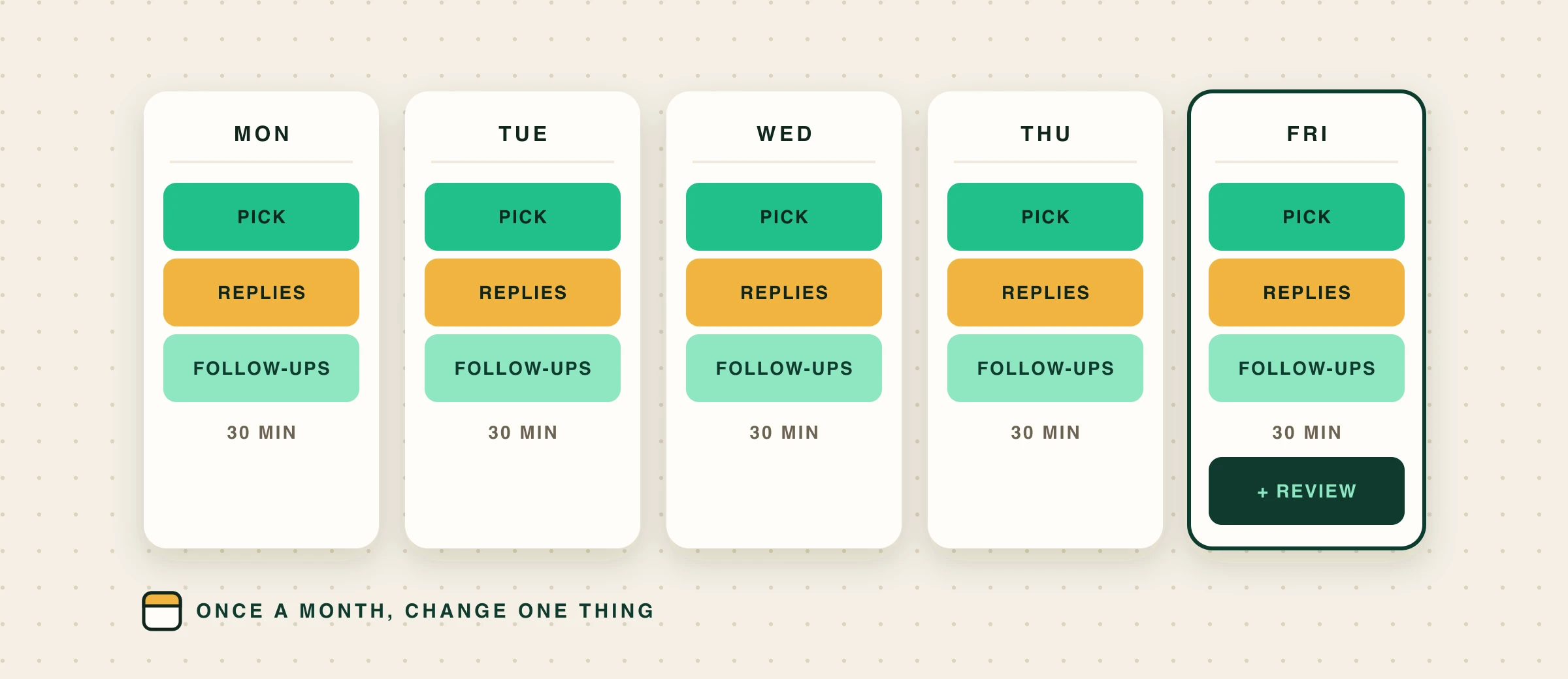
- Every day, 30 minutes. Ten minutes choosing and checking today’s companies and first emails. Ten minutes answering replies (see what to send back). Ten minutes on the follow-ups due today.
- Friday, 30 more minutes. Read every reply from the week, tally them by type, and note the objections in their own words.
- Once a month, change one thing: a disqualifier in your criteria, the offer, or the opening line. Never three at once.
Twenty a day is enough. One founder on Indie Hackers went from 25 emails a day to 88 and saw replies drop to zero (one person’s experience, but a common one). Small, steady volume from a single real mailbox is also what keeps you out of spam: see cold email deliverability in 2026.
Learn from replies, not A/B tests
At a 4% reply rate, 50 emails get you two replies. Splitting them into version A and version B tells you nothing; the difference is noise. At founder volume, the useful data is what people say. Keep a tracker with a handful of columns: company, why you picked them, date sent, reply type, next step and its date. A spreadsheet is fine until you have more than a few dozen live conversations.
After a month, the objections column is your best research. If the same reason for “no” comes up three times, it is either a disqualifier to add to your targeting or something to fix in the product.
Charge early, hand off late
Put a price on it from the first call. Pilot’s founder Waseem Daher charged from day one and made his first sales hire about ten months in, at roughly 60 customers and $250K ARR. In Gong’s deal data, deals where budget came up on the first call won far more often (a correlation, but a consistent one). A free pilot with no end date tells you very little about whether anyone will pay.
Keep selling yourself until the process repeats. Martin Casado at a16z argues that founders should sell until the sale is repeatable, and Pete Kazanjy’s Founding Sales puts a number on “repeatable”: a win rate of 15 to 30%, hit reliably. Before that point, a hire inherits a process nobody has figured out. See founder-led sales.
Running the week in PineLead
In PineLead
The daily 30 minutes, with the busywork done
PineLead covers the first ten minutes of each day. It finds new B2B companies, researches each one’s site, keeps the ones that fit your criteria and drafts a first email for each. You review and send. The rest of the system stays yours.
- Set Prospects per day on Limits → Analysis. Twenty is a good start.
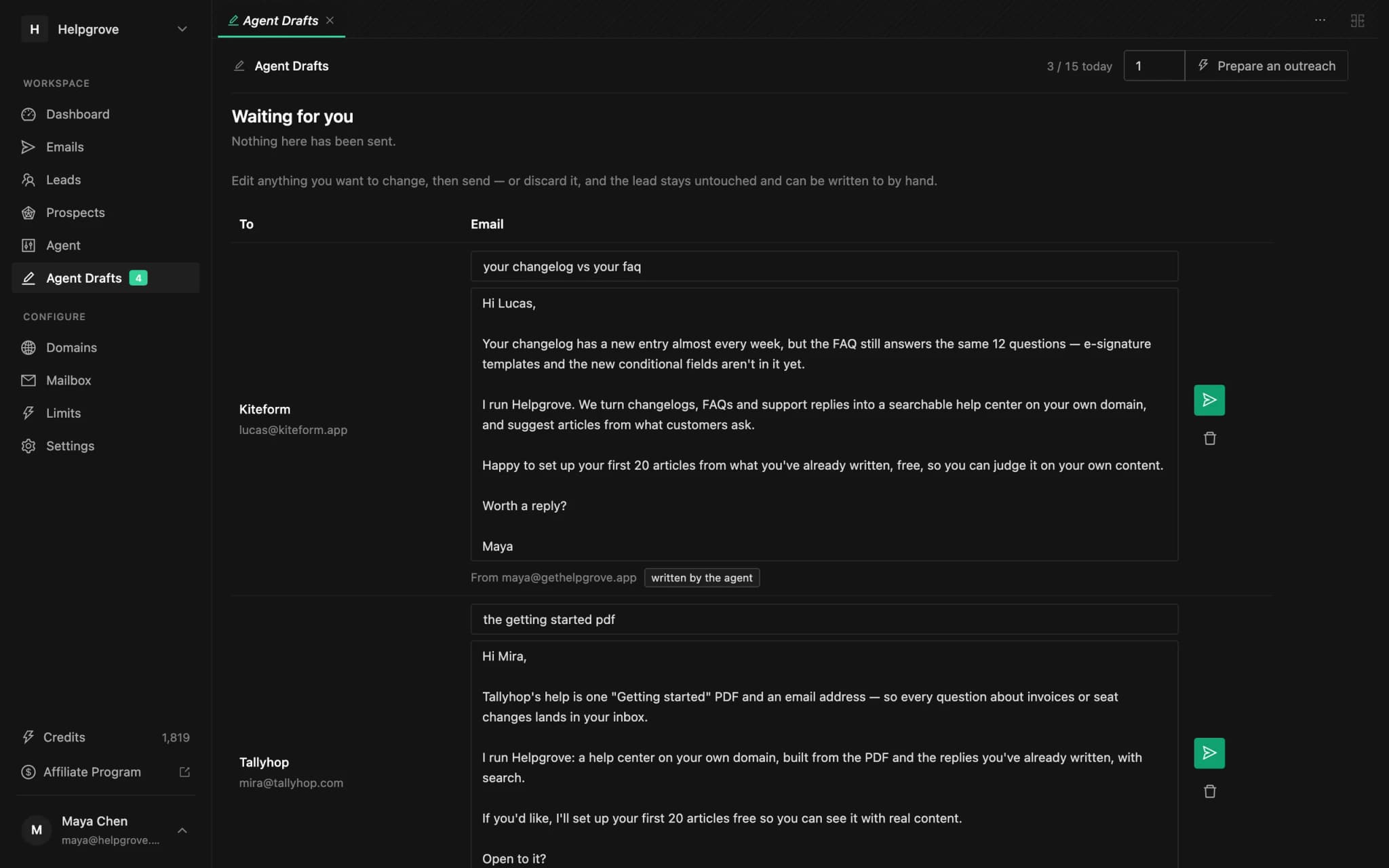
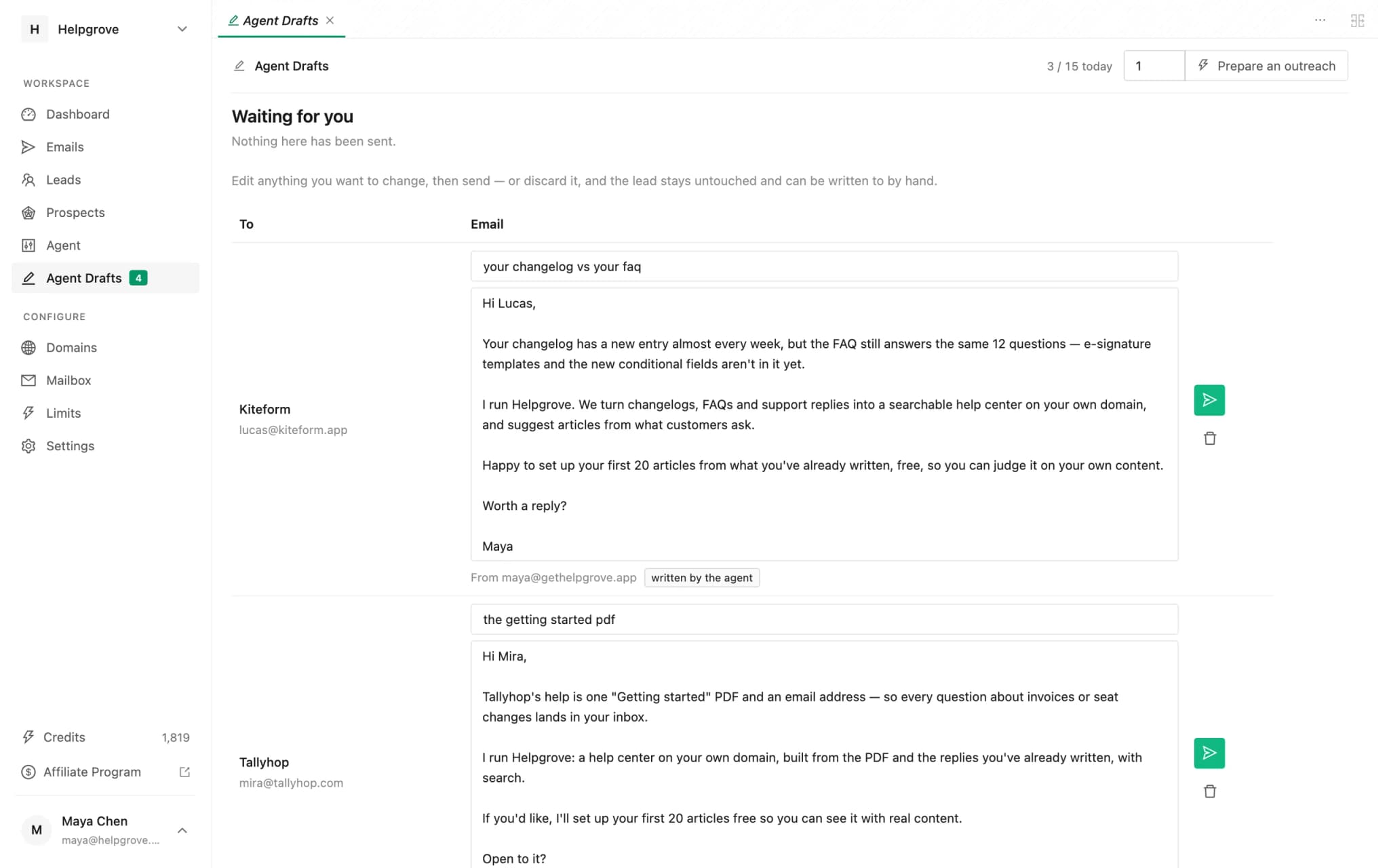
- Each morning, open Agent Drafts, edit what needs it and send.
- The Dashboard shows where every lead stands and how many follow-ups are due today, which covers the last ten minutes.
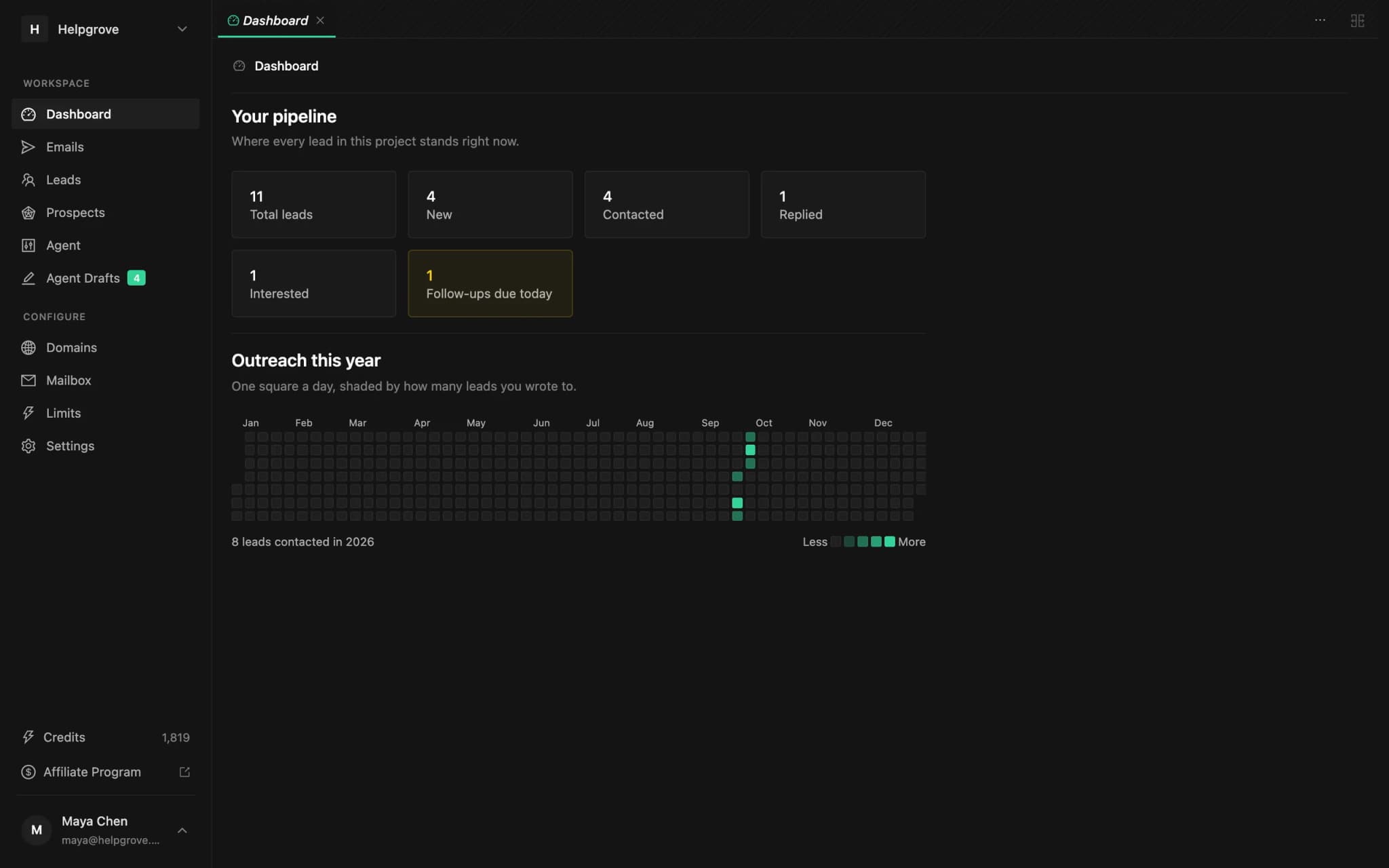
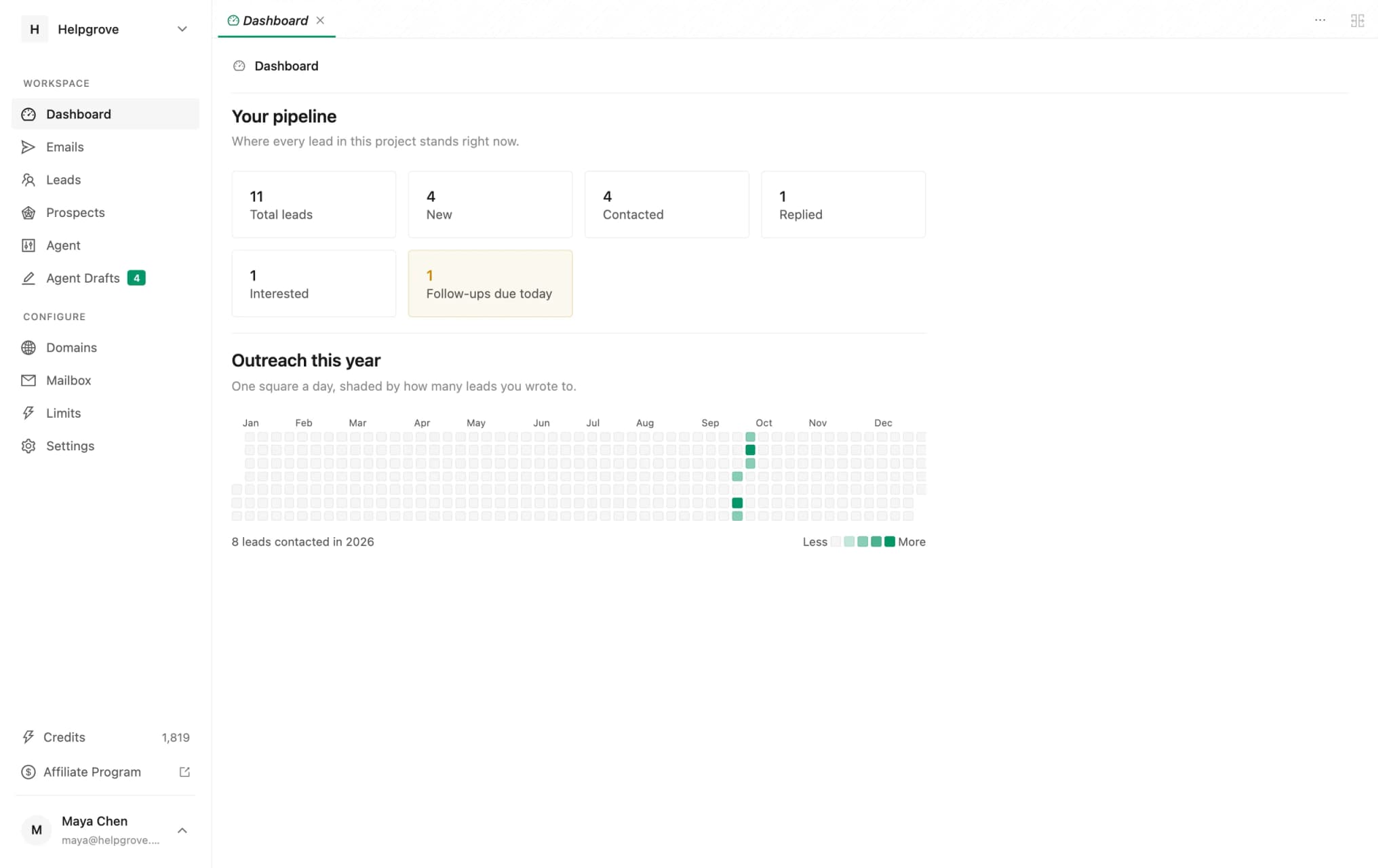
It costs about $0.15 per company taken to a draft, so the 400 companies in the example above come to around $60 a month. Credits never expire, and a slow week costs nothing.
Frequently asked questions
- How many cold emails does it take to get a client?
- There is no reliable single number. At 20 well-targeted emails a day, a typical month of 400 emails produces a few calls, and a customer usually takes several calls. Sharper targeting and personalization move it more than volume does.
- How much time should a founder spend on outbound?
- About 30 minutes a day, plus 30 minutes on Fridays to read the week’s replies. Consistency matters more than volume: a steady 20 a day from one mailbox gets better replies and keeps your sending reputation safe.
- Where do most first B2B customers come from?
- Founders’ personal networks first and targeted outbound second, according to Lenny Rachitsky’s survey of 30+ B2B companies. Founders who grow past $10k MRR are more likely to have started with outreach than with communities.
- When should a founder hire their first salesperson?
- When the sale repeats: Founding Sales suggests a reliable 15–30% win rate. Pilot’s founder hired his first rep about ten months in, at roughly 60 customers. Before that, a hire inherits a process nobody has figured out.
- Should I A/B test my cold emails?
- Not at founder volume. 50 emails at a 4% reply rate is two replies, which is noise. Read every reply, keep an objections log, and change one thing a month.
Try it on your own market
PineLead finds new B2B prospects every day, researches and qualifies each one against your criteria, and drafts a first email you approve. Start with 100 free credits.
Keep reading
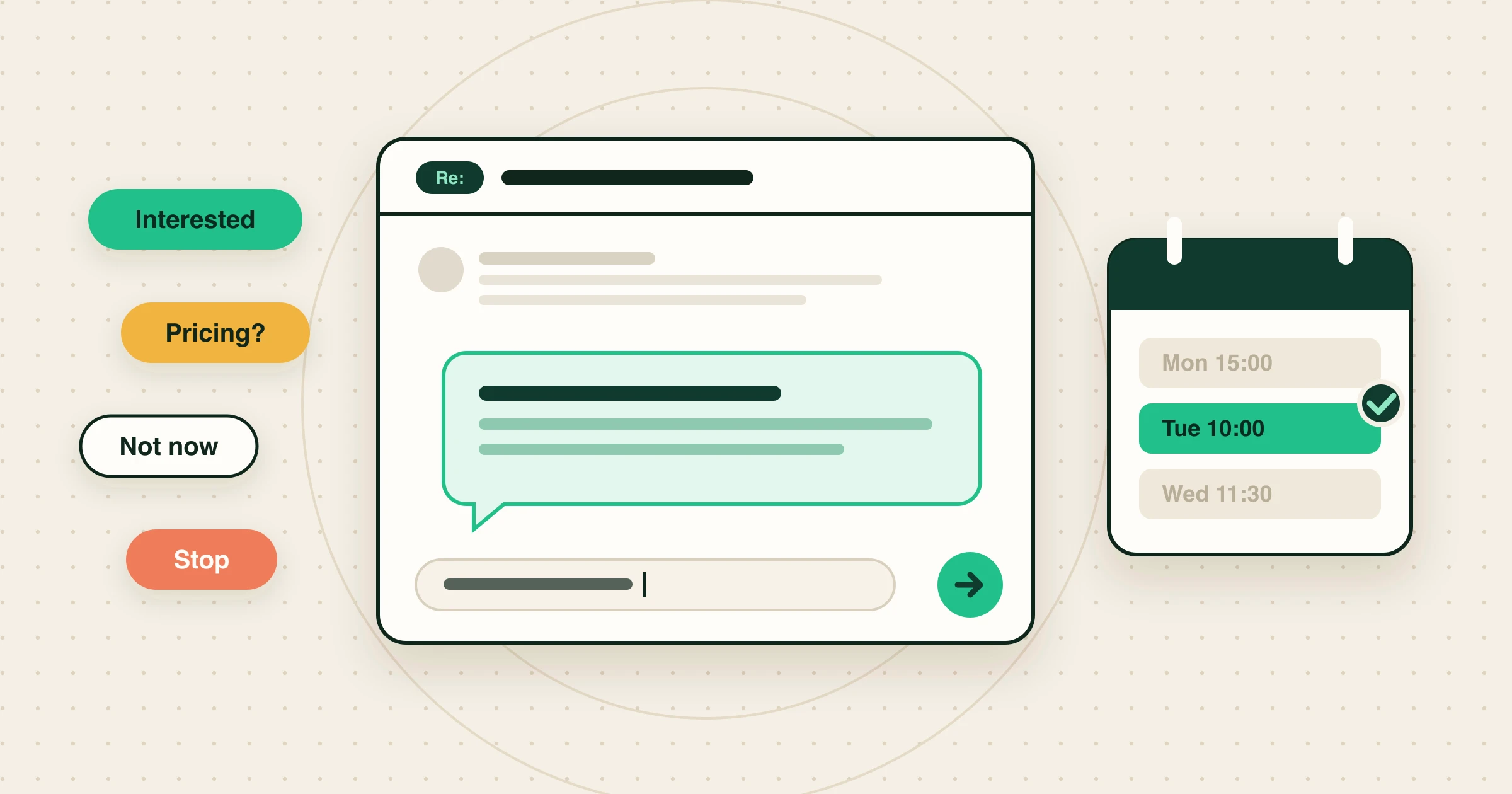 Someone replied to your cold email. Here’s what to send back.What to send back to every kind of cold email reply: interested, send info, pricing, talk to X, not now, not interested and stop. With examples.
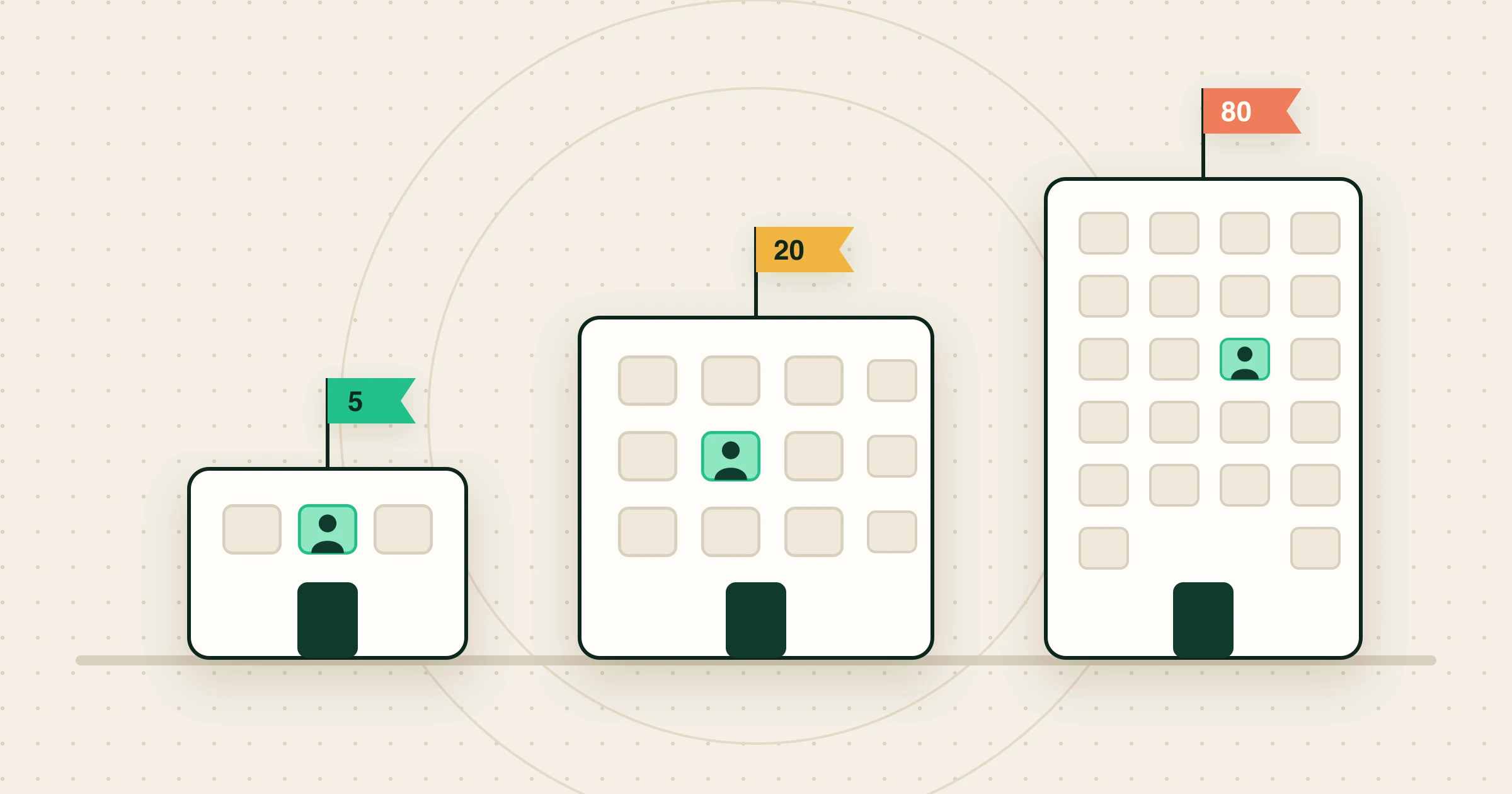 How to sell to startups (when you’re a startup too)Who decides at a 5, 20 and 80-person startup, the changes that make startups buy, what they refuse, and example first emails to one startup.
 How to write an ICP an AI agent can actually qualify againstTurn your ideal customer profile into criteria an AI can check on a company’s website: observable signals, disqualifiers first, a template and a test loop.
Written with Skribra, the AI blog writer that researches, writes and publishes SEO articles for your site.