 Sev Leo, Founder of PineLead
Who decides, by company size
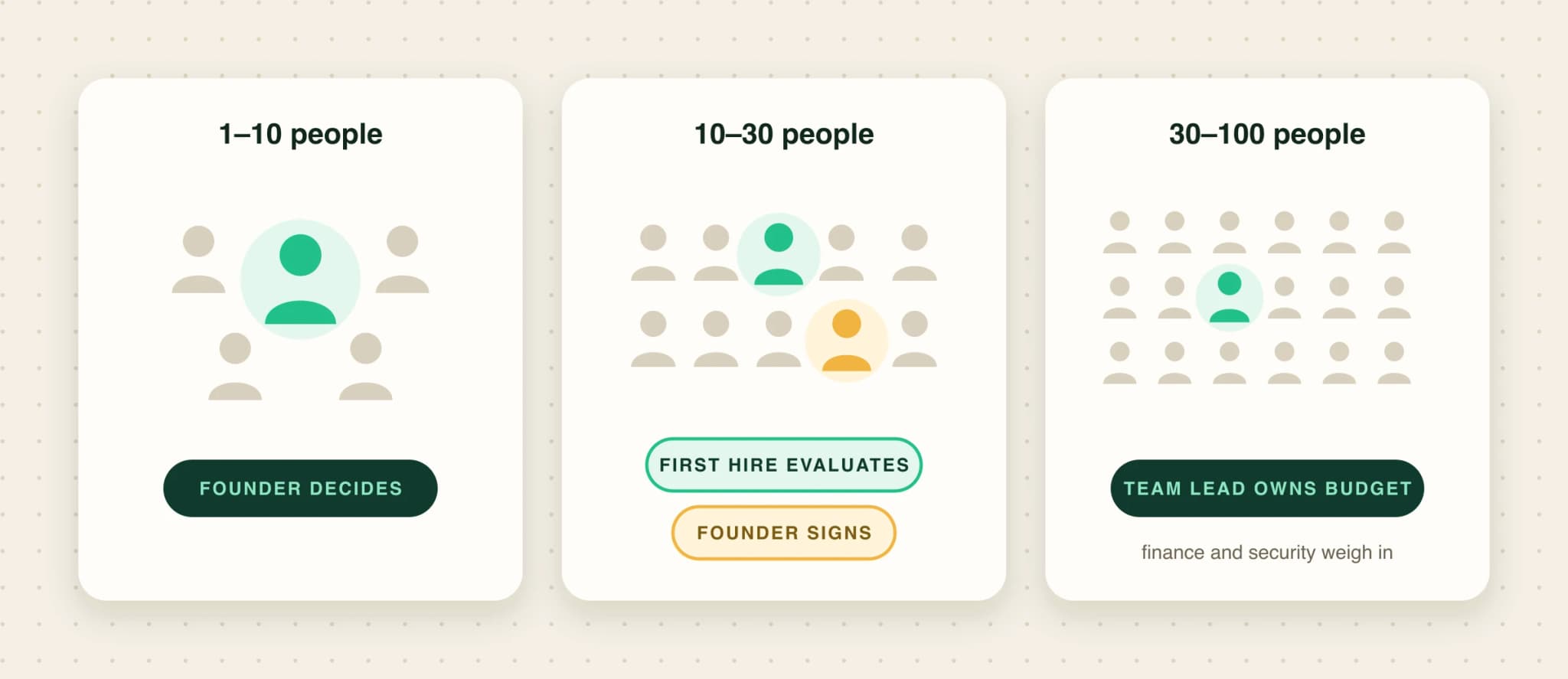
Startups are small and getting smaller. Carta’s State of Seed report found that the average seed-stage company had 6.2 equity-holding employees in 2025, down from 10.3 in 2021. So for most of the startups you’ll email, there is no procurement, no IT department and no buying committee. There is a founder with a credit card and very little time. This is a rule of thumb, but it holds well:
| Team size | Who to email | How to tell from their site |
|---|---|---|
| 1–10 | A founder: the CTO for anything technical, the CEO for the rest | A handful of people on the About page; few or no open roles |
| 10–30 | The first person hired for your area; a founder signs | Titles like “founding engineer” or “first marketer” |
| 30–100 | The team lead whose problem you solve; finance and security weigh in | Roles named by department; a security or trust page |
Finding the right person and their address is its own job, covered in who to email at a startup.
When startups buy
Startups rarely buy because a tool is good. They buy because something just changed and the old way broke. Most of these changes show on their own website, which makes them good trigger events to write about:
- A first hire in a function. A new “founding marketer” job post means someone is about to own a budget and look for tools to do the job.
- The first enterprise customer. A new enterprise tier, an SSO line on the pricing page or a fresh trust page usually means security questionnaires have started arriving.
- Growing pains you can see. A changelog that ships weekly while the help docs stay frozen. A pricing page that changed twice this quarter. A status page with a bad month.
- New money. A funding round means budget, but don’t open with congratulations: everyone does. Write about what the money is for, usually the hiring plan on their careers page.
What startups won’t buy, and what they will
Startups do spend on software. Vertice puts the average at about $9,300 per employee a year across its customers (all sizes, so treat it as an outer bound for a seed team). But they spend it in small, cancellable pieces. Expect pushback on:
- Annual prepay and long contracts. Their runway is measured in months, so yours should be too. Offer monthly.
- Setup projects. If it takes a week to see value, you’re competing with their roadmap. Do the setup yourself.
- “Book a demo to see pricing”. Founders read hidden pricing as expensive and slow. Publish it.
- Unpaid pilots with no end date. Bessemer’s advice on design partners applies to any early deal: discounts are fine, but set a hard date to convert to paid.
What works is a small, concrete first step they can say yes to in one reply: a free first batch of the work, a month at a discount, a setup you do for them. If they wouldn’t miss it after a month, you didn’t have a customer anyway.
Writing to a founder
Founders read email between other things, on their phone, and they get a lot of it. Write like one founder to another: plain text, a few lines, one specific thing about their product, no deck and no title inflation. Sign with your own name. In Hunter’s 2026 survey, 69% of US decision-makers said AI-written email bothers them, so read every draft before it goes. The first-email guide has the data on length, subject lines and the ask.
Here is one startup, written to by three different sellers. Kiteform (made up for this example) is a five-person forms tool with weekly changelog entries, a 12-question FAQ and a new job post for its first marketer.
Subject: your changelog vs your faq

Hi Lucas,

Your changelog ships almost weekly, but the FAQ still answers the same 12 questions, so the new conditional fields aren't in it yet.

We turn changelogs and support replies into a searchable help center on your domain. Happy to build your first 20 articles free so you can judge it on your own content.

Worth a reply?

Maya
Subject: before your first marketer starts

Hi Lucas,

Saw the founding marketer role. Whoever you hire will want a blog with more than six posts to work from on day one.

We write for early SaaS teams on a monthly retainer, cancel anytime. I could send three topic ideas for Kiteform this week, no strings.

Open to it?

Ana
Subject: kiteform's new enterprise plan

Hi Lucas,

The new Enterprise tier mentions SSO, which usually means security questionnaires are about to start arriving.

We answer them from your existing policies in minutes. If you have one sitting in your inbox now, I'll fill it in free to show you.

Worth a look?

Tom
Same company, three different reasons to write, each visible on its website. None of them mention funding, and none of them could be sent to anyone else.
The risk: startups disappear
Selling to startups means some of your customers will pivot, shut down or simply stop answering. Two habits limit the damage. Before you write, check for signs of life: a changelog or blog updated in the last few months, open roles, a working sign-up. And once they say yes, bill monthly in advance and avoid custom work on credit.
Finding startups to sell to with PineLead
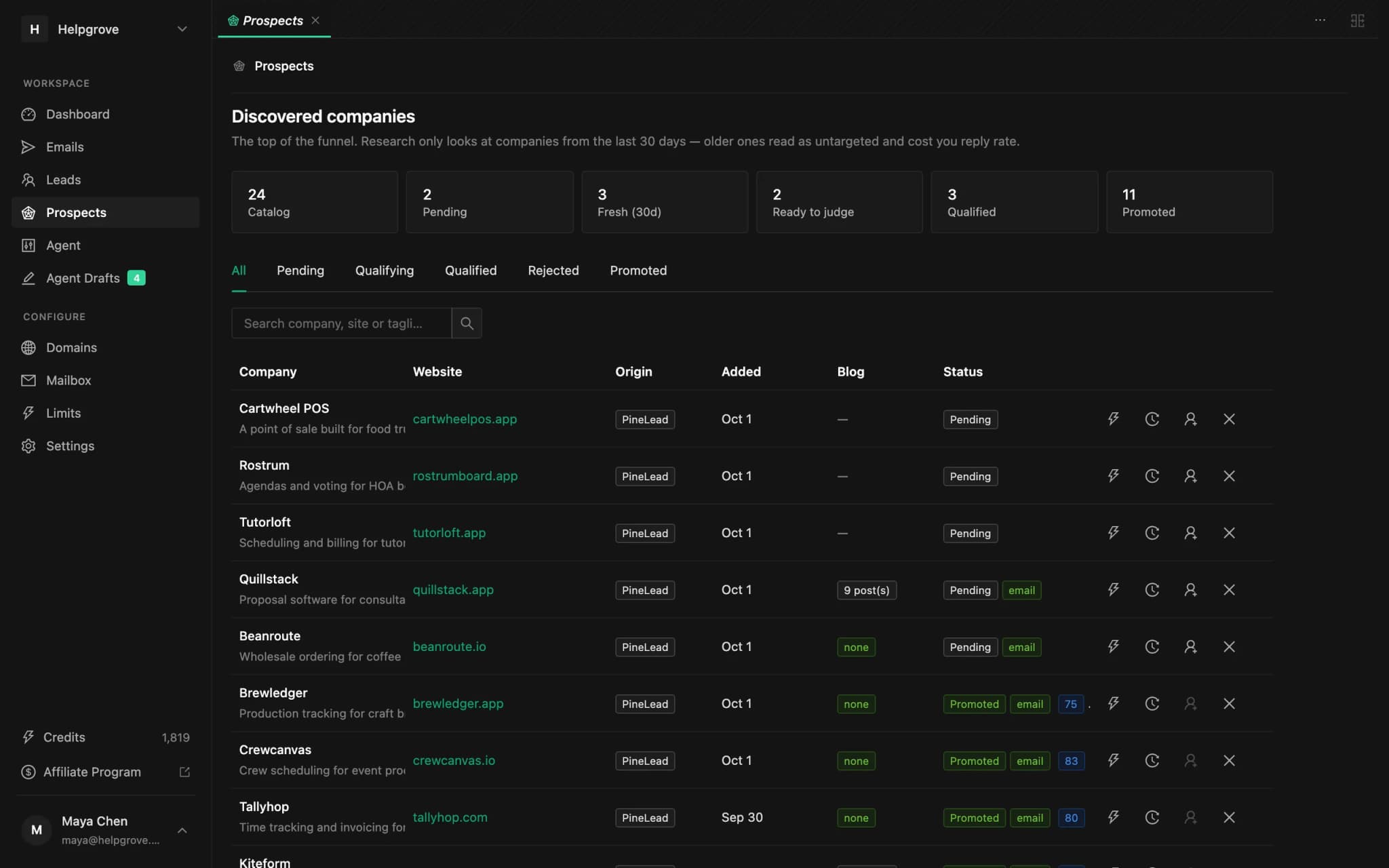
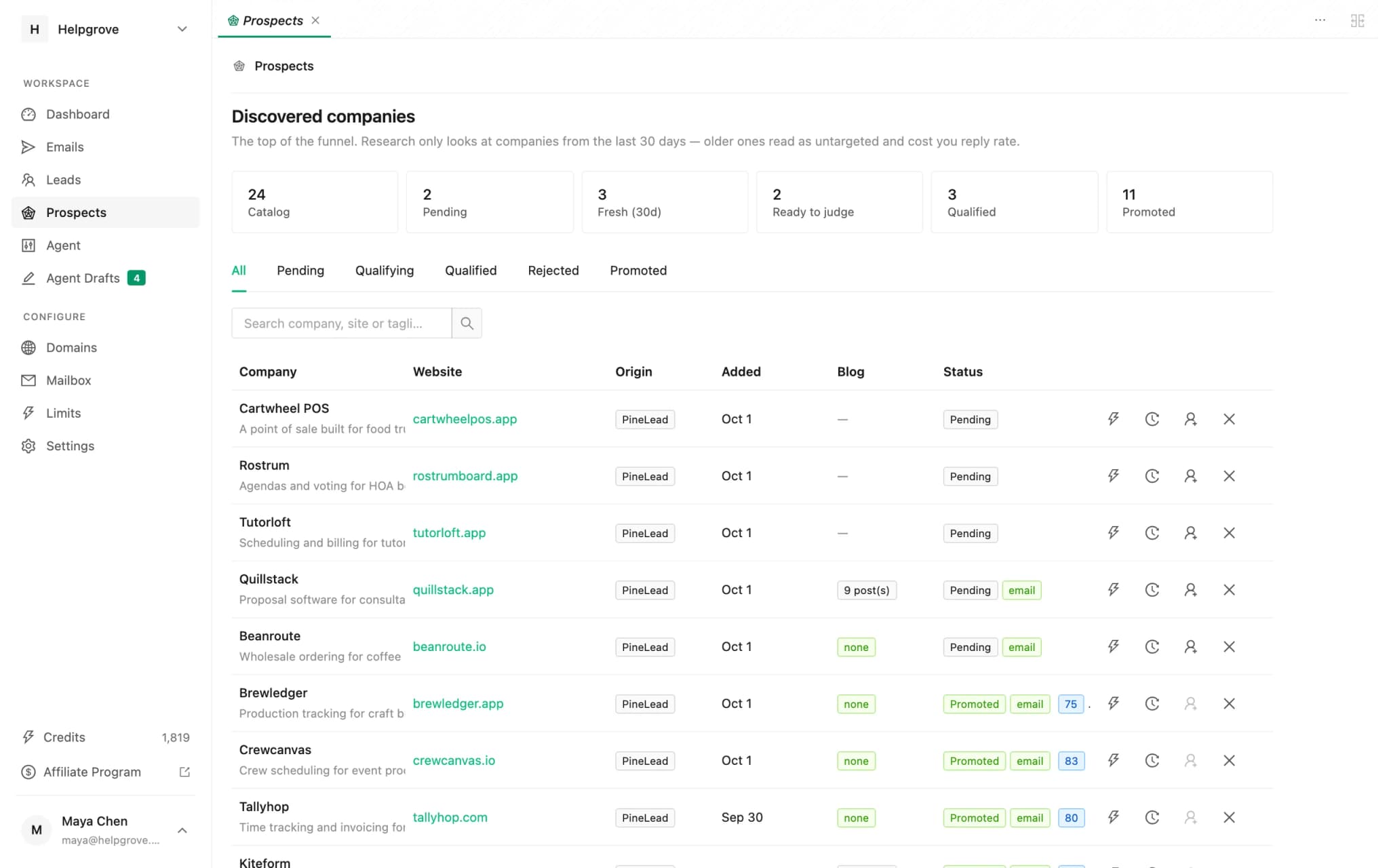
In PineLead
Fresh startups every day, judged on their own site
PineLead finds new B2B companies every day, mostly SaaS and startups, and reads each one’s website before judging it. That makes the size and trigger signals above usable as criteria: the agent checks the team page, the careers page and the pricing page for you.
- Write criteria that use what a startup’s site shows, such as “team page lists fewer than 15 people” or “has a public pricing page”. The ICP guide has a template.
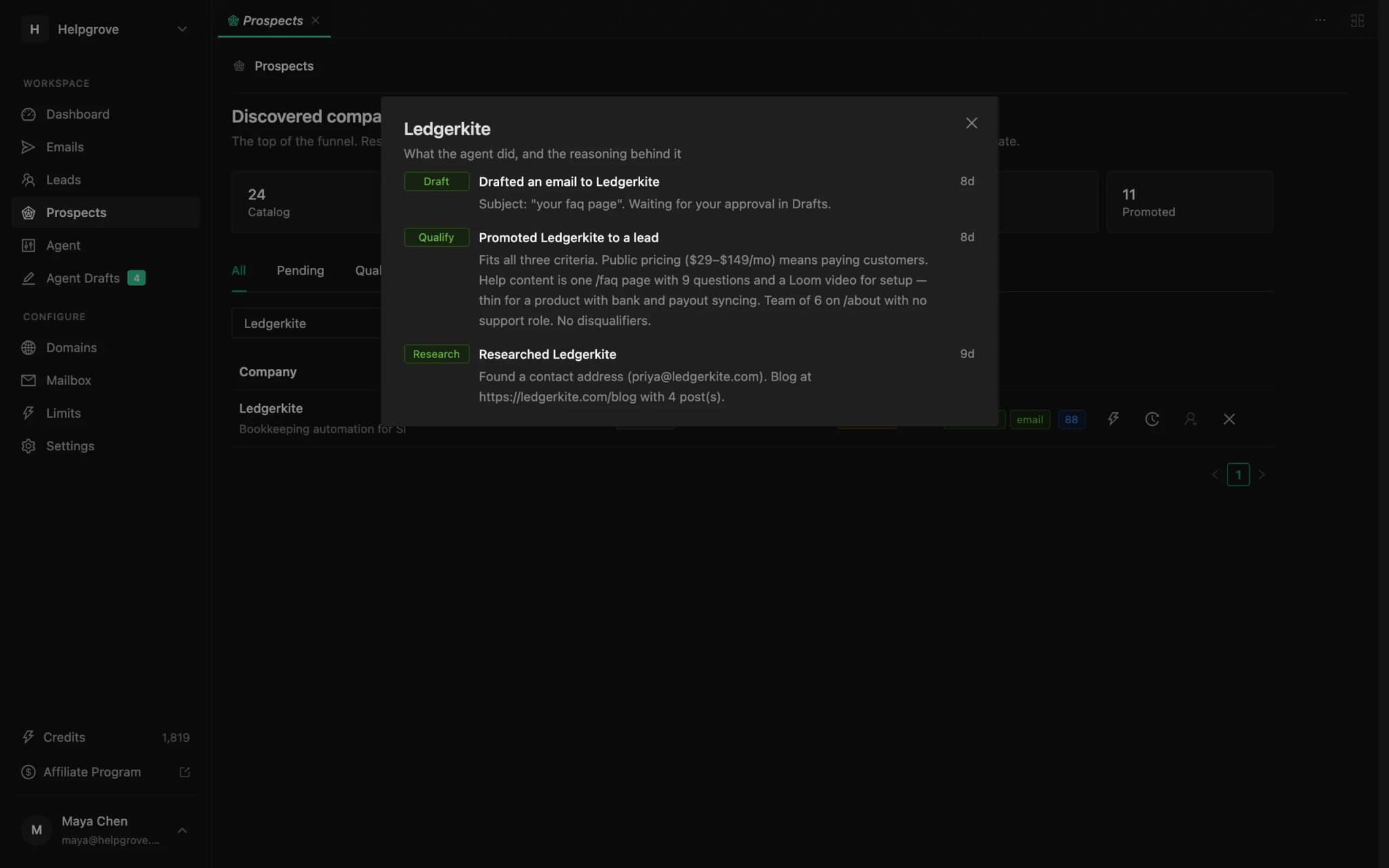
- Check what the research found before you trust a verdict. The history on each company shows the evidence it used.
Frequently asked questions
- Who should I email at a startup?
- Under about 15 people, the founder closest to your problem: usually the CTO for developer tools and the CEO for everything else. Between 10 and 30 people, the first person hired for that area evaluates and a founder signs. Above that, the team lead who owns the budget.
- When do startups buy new software?
- When something changes: a first hire in a function, a first enterprise customer asking for security paperwork, growth that outpaces their docs or support, or a funding round that pays for a hiring plan. Most of these show on the startup’s own website.
- How do I price for startup customers?
- Publish your price, offer monthly billing, and give them a small first step they can accept in one reply, such as a free first batch of work. Avoid annual prepay, long setups and open-ended unpaid pilots.
- Should I congratulate a startup on its funding round?
- No. Everyone does, and it says nothing about them. Write about what the money is for instead, which is usually visible in their open roles.
- How do I reduce the risk of startup customers churning?
- Check for signs of life before you reach out (recent changelog or blog posts, open roles, a working sign-up), bill monthly in advance, and avoid custom work on credit.
Try it on your own market
PineLead finds new B2B prospects every day, researches and qualifies each one against your criteria, and drafts a first email you approve. Start with 100 free credits.
Keep reading
 Who to email at a startup, and how to find their addressWho to write to at a startup, five places founders publish their address, when hello@ is fine, and why a fifth of business domains can’t be verified.
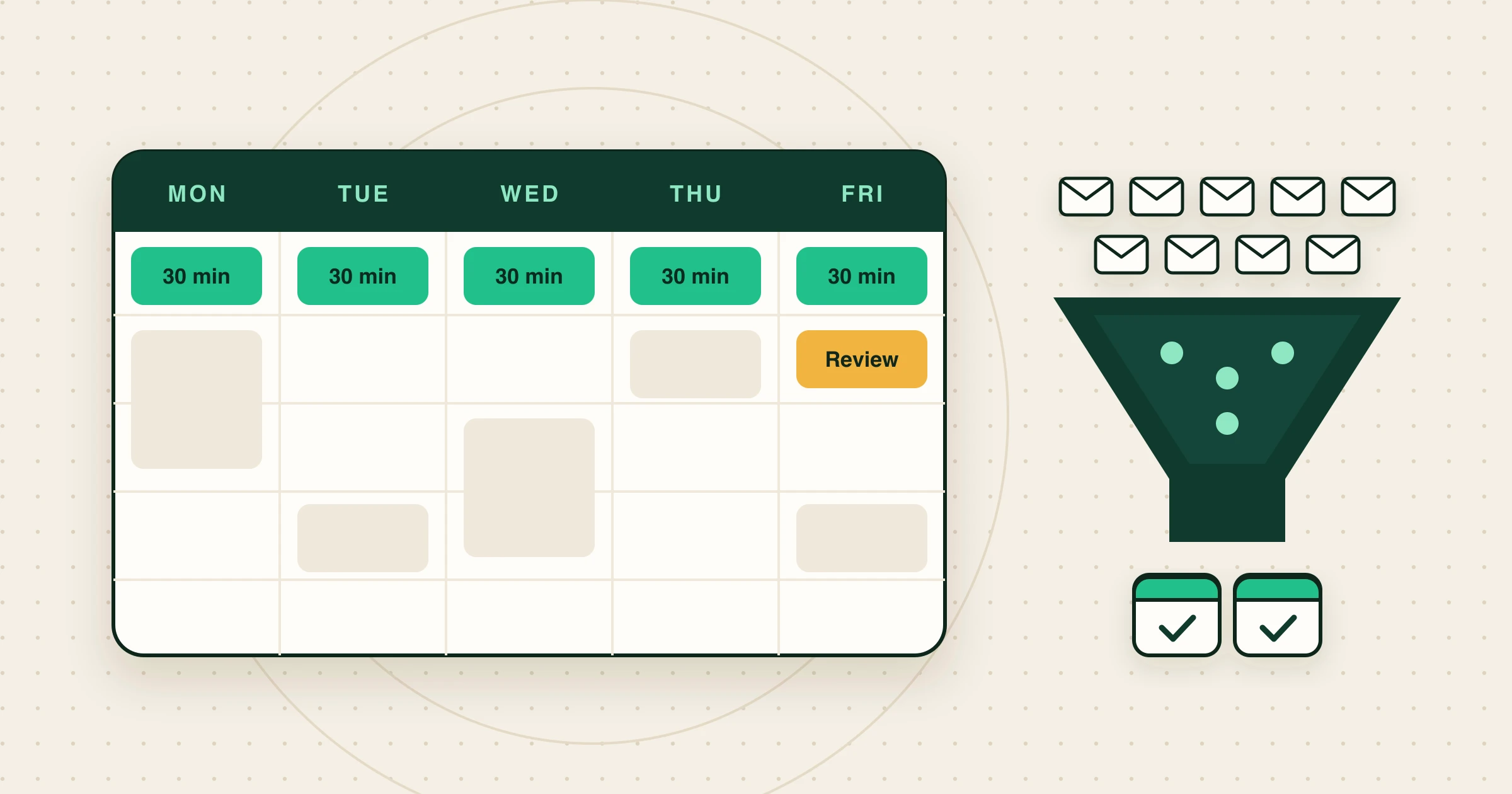 Founder-led outbound: a 30-minute daily system for your first customersHow founders run outbound without a sales team: where first B2B customers come from, honest funnel math, a 30-minute daily routine, and when to hand off.
 How to write an ICP an AI agent can actually qualify againstTurn your ideal customer profile into criteria an AI can check on a company’s website: observable signals, disqualifiers first, a template and a test loop.
Written with Skribra, the AI blog writer that researches, writes and publishes SEO articles for your site.